If you have ever spent a sleepless night gently trying to stop your baby from scratching red, dry patches on their arms or tummy, you know how heartbreaking infant eczema can be.
You have likely already swapped out your laundry detergent for a fragrance-free formula, switched to lukewarm baths, and tried every soothing balm on the shelf. Yet, the flare-ups keep coming back.
There is one major trigger that sits directly against your baby’s skin 24 hours a day—and almost every parent overlooks it: the hidden synthetic dyes inside conventional baby clothes.
Here is what you need to know about how fabric dyes affect delicate newborn skin, and why switching to naturally plant-dyed garments can make a world of difference.
The Hidden Irritants in Conventional Baby Clothes
A baby’s skin is roughly 30% thinner than an adult’s, making it far more permeable and vulnerable to environmental irritants. Even when a garment label says "100% Cotton" or "Organic Cotton," it only tells you about the raw fiber—not what happened to it in the dye house.
To achieve bright, mass-market colors at a low cost, conventional clothing manufacturers rely heavily on petroleum-based synthetic dyes (such as azo dyes) and chemical fixing agents, including:
-
Formaldehyde resins (used to prevent wrinkling and shrinking)
-
Heavy metals like chromium, copper, and nickel (used to lock in bright pigments)
-
Harsh chemical mordants
When your baby gets warm, sweats, or drools, those microscopic chemical residues can leach out of the fabric fibers and penetrate their compromised skin barrier—triggering contact dermatitis and stubborn eczema flare-ups.
4 Fabric Rules for Eczema-Prone Babies
When dressing a baby with sensitive skin or atopic dermatitis, pediatricians and textile experts recommend following four strict rules:
-
Choose Breathable Natural Fibers: Stick to ultra-soft, breathable fabrics like organic cotton and bamboo-derived viscose that regulate body temperature and prevent sweat buildup (heat and sweat are top eczema triggers).
-
Eliminate Synthetic Dyes: Look for garments colored strictly with botanical extracts rather than petrochemical pigments.
-
Avoid Rough Seams and Tags: Scratchy neck tags and bulky inner seams rub against inflamed skin, worsening irritation.
-
Skip Tight Elastic Bands: Gentle, flexible fits allow air circulation without leaving red pressure marks around wrists and ankles.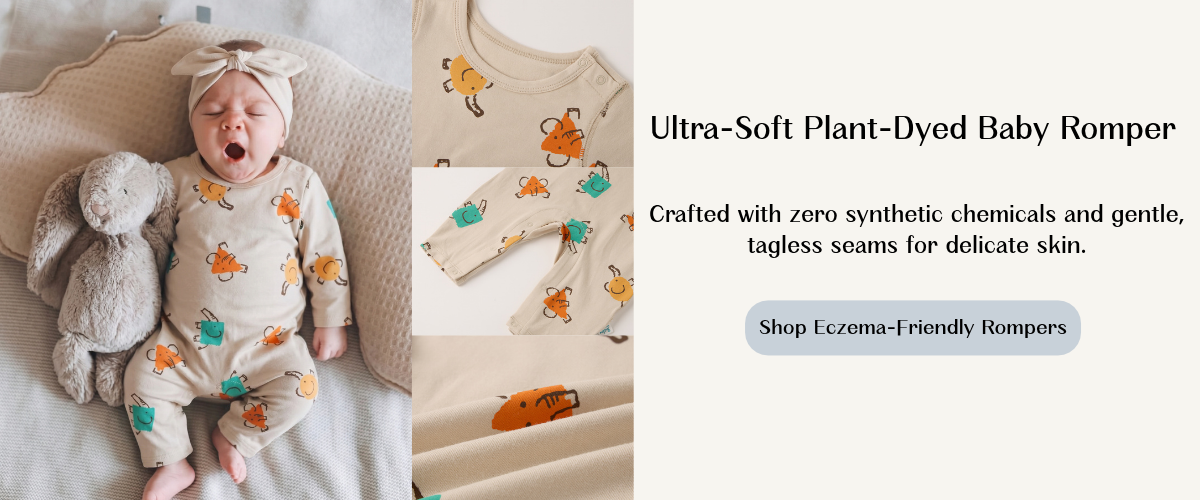
Why Plant-Dyed Fabrics Are Naturally Gentle
At Senseng Apparel, we asked a simple question: Why put harsh chemicals on the purest skin on earth when nature already provides breathtaking colors?
Unlike synthetic dyes that coat fabric fibers in a chemical film, our plant-dyeing process extracts pure pigments directly from real botanicals—such as chamomile flowers, marigold, madder root, pomegranate rind, and natural indigo.
Here is why conscious parents are making the switch:
-
Zero Toxic Residue: Free from heavy metals, formaldehyde, and harsh chemical fixatives. If your baby chews on their sleeve (and we know they will), you have total peace of mind.
-
Naturally Soothing Properties: Many botanicals used in traditional plant dyeing are celebrated in herbal wellness for their naturally calming, skin-friendly profiles.
-
Breathable Softness: Because plant pigments bond gently with natural fibers without sealing them off, the fabric retains its cloud-like softness and airflow.
-
Calming, Earth-Toned Palette: Instead of overstimulating neon shades, botanical dyes create serene, timeless hues that look effortlessly beautiful on every baby.
(Curious about how we turn real flowers, roots, and leaves into wash-safe colors? Read our full Plant-Dyed Process & Safety Standards here →
How to Build a Flare-Up-Free Daily Wardrobe
You do not need to overhaul your entire nursery overnight. Start with the layers that touch your baby’s skin the longest:
-
Daytime Essentials: Opt for loose-fitting, breathable botanical-dyed bodysuits and rompers that allow easy diaper changes without irritating sensitive tummy skin.
-
Sleepwear: Babies do most of their skin healing while they sleep. Dress them in lightweight, temperature-regulating plant-dyed sleepers to prevent nighttime overheating and itching.
-
Feeding & Drool Protection: Drool rash around the chin and neck is common during teething. Keep ultra-absorbent, chemical-free cotton bibs on hand to wick away moisture gently.

Frequently Asked Questions About Plant-Dyed Baby Clothes
Q: Do plant-dyed baby clothes fade easily in the wash?
Not when properly bonded. We use natural, non-toxic mineral mordants to lock botanical pigments deep into the fibers. Simply machine wash on a gentle cold cycle with mild, fragrance-free detergent and line dry in the shade to keep the colors soft and luminous.
Q: Why do natural-dyed garments have slight variations in shade?
Because we use real plants harvested from nature rather than factory-made chemicals, each batch carries subtle, organic nuances—making every piece truly one-of-a-kind.


