The term plant-dyed organic cotton isn't just a marketing buzzword; it represents a complete detoxification of the textile process.
Zero Toxic Runoff: Unlike synthetic dyes that rely on heavy metals like chrome and copper, plant-dyed organic cotton utilizes pigments extracted from pomegranate skins, tea leaves, and madder roots.
Hypoallergenic by Nature: Many "mystery rashes" are actually Contact Dermatitis caused by residual chemicals. Plant-dyed organic cotton is naturally pH-balanced, matching the delicate acidity of a newborn's skin.
Breathability & Comfort: Because no harsh plastic films (common in cheap synthetic prints) are used, the pores of the plant-dyed organic cotton remain open, allowing for superior thermoregulation.
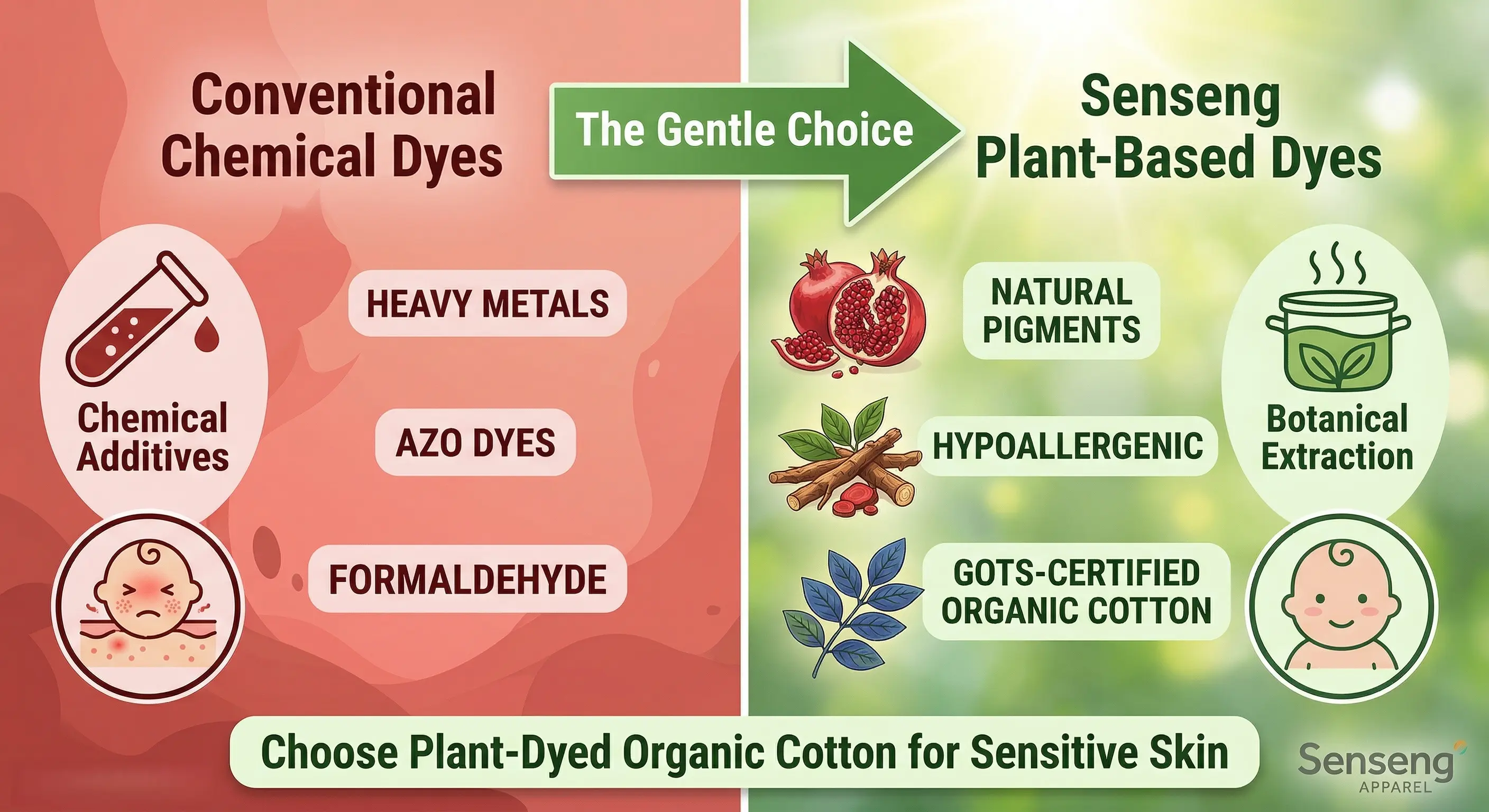
Eczema-prone skin has a compromised barrier. Conventional dyes contain "sensitizers" that trigger flare-ups. Plant-dyed organic cotton eliminates these triggers. Furthermore, certain botanical dyes used in Senseng’s plant-dyed organic cotton collections have inherent medicinal properties—such as indigo’s natural antibacterial qualities—which can help soothe irritated skin rather than agitating it.
The "eye test" is your first clue. Plant-dyed organic cotton features a unique, "living" color palette. You won't find neon or fluorescent hues here; instead, you'll see soft, earthy tones that reflect the natural world. Additionally, always look for GOTS (Global Organic Textile Standard) certification and lab reports. At Senseng, our plant-dyed organic cotton baby rompers undergo rigorous testing to ensure they are free from over 100 harmful substances.
When you invest in plant-dyed organic cotton, you are paying for a labor-intensive process. It takes hours of slow-simmering botanical baths to achieve the rich, safe colors found in our Senseng Organic Newborn Sets. Compared to mass-produced chemical garments, plant-dyed organic cotton supports a regenerative cycle that protects both your baby and the planet’s water supply.
To preserve the integrity of the plant-dyed organic cotton fibers, we recommend using pH-neutral, eco-friendly detergents. Avoid direct prolonged sunlight when drying, as the natural pigments in plant-dyed organic cotton are sensitive to UV, much like a real flower.


